
Cashew Export Business in Tanzania: The 2026/27 Operating Guide
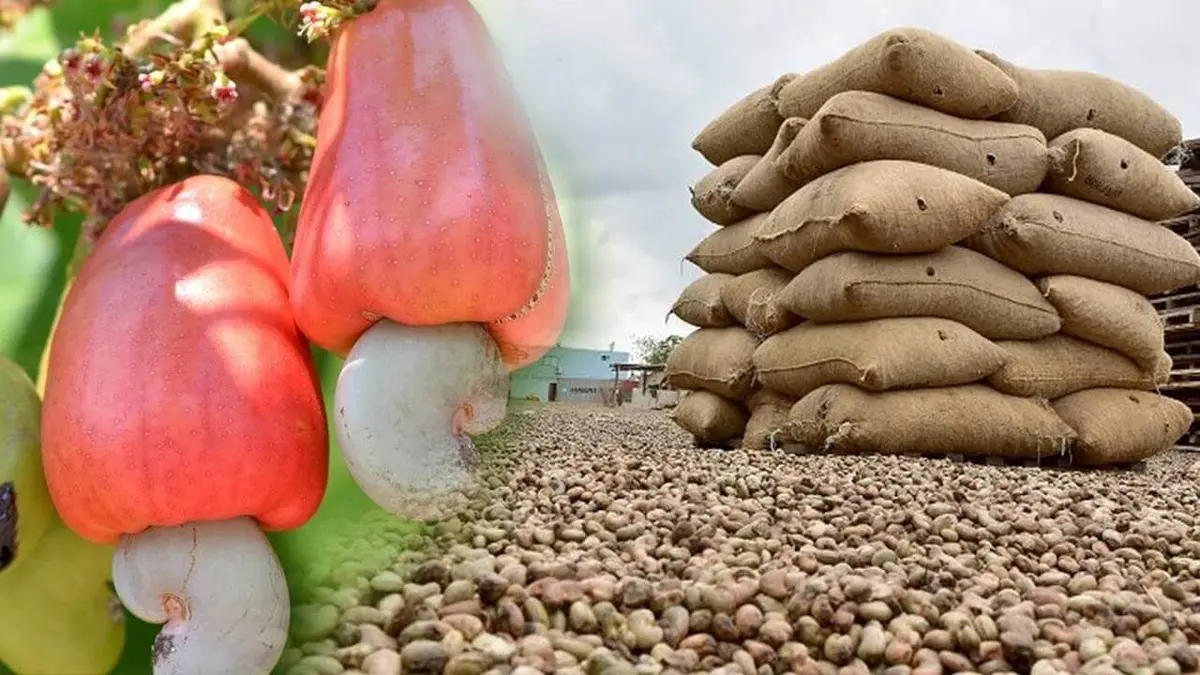
What is a cashew export business in Tanzania actually built on? Four instruments, not one: a company at BRELA, a tax file at TRA, a season-specific raw-cashew buying licence for export from the Cashewnut Board of Tanzania, and a bid-security deposit lodged with the Board before that licence issues. Nuts are not bought from farmers. They are bought at online auction on the Tanzania Mercantile Exchange, from stock already deposited, graded and warehoused. A winning bid becomes a sale only once the selling cooperative union consents. Payment is in Tanzanian shillings within five working days; collection follows within a fortnight on last-published rules; sale into Vietnam or India settles in United States dollars weeks later. The gap between those two events, not the margin on the nut, is what the business finances. The 2026/27 marketing season opened on 1 September 2026. The Board has indicated auctions open on 19 October 2026; confirm the live timetable.
This page is the 2026/27 operating file: auction mechanics, the cost stack, working capital and the export-versus-process arithmetic. It is not a licence-class orientation, not a kernel-wholesale sourcing note, and not a crop-board map. Those sit on sister pages so the three files do not repeat each other.
- Licence class only: raw cashewnut buying licence
- Sector map: cashew crop, processing and export licences
- Kernel grade before payment: wholesale Tanzanian cashew sourcing
- Which board owns which crop: cashew, coffee and tea regulator map
Law and market data are stated as at 9 September 2026, with a desk review on 10 September 2026. The Board’s Rules and Conditions of Sale for 2026/27 and the exchange’s 2026/27 raw-cashew trading procedure had not been published at that date. Every operational figure below is drawn from the most recent published season document and is labelled that way. Confirm live Board, TMX and TRA instruments before you bid or ship.
What is restricted before anything else is considered
Tanzanian sector copy usually explains process before eligibility. For a foreign-owned buyer that sequence is the wrong way round, and in cashew it is actively misleading, because the restriction that matters is not in the cashew law.
The Cashewnut Industry Act reserves nothing by nationality. The Act: consolidated as Cap. 203, Revised Edition 2023: frames licensing in terms of “a person.” A dealer, whether buyer, processor, importer, exporter or warehouse operator, must register with the Board and hold a licence. No citizenship test, no residence test, no minimum Tanzanian shareholding, and no clause reserving the trade to cooperatives appears in the statute. There is no cashew analogue to the local-content regime that governs mining.
A general business-licensing instrument does reserve one part of the chain. The Business Licensing (Prohibition of Business Activities for Non-Citizens) Order, Government Notice No. 487A of 28 July 2025, prohibits non-citizens from a schedule of activities. Item 13 is on-farm crop purchasing operations. Cashew is caught because it is a crop, not because it is cashew. This page publishes no penalty figure for that Order. Other Zatra orientation pages treat a majority-foreign company as needing to screen the Order; international counsel have also flagged that a strict reading of “non-citizen” may reach only natural persons. Both points require a written opinion from a Tanzanian advocate against the gazetted text before any foreign-owned structure is committed. Foreign-investor setup is the structuring desk; it is not a substitute for that opinion.
The exchange expressly admits foreign buyers. The Tanzania Mercantile Exchange’s raw-cashew trading procedure for 2025/26 states that all buyers, domestic and international, small and large, may participate, subject to a Board licence, a Buyer Declaration Form and a bid-security deposit. Foreign participation is not novel: a 2004 study for the government’s private-enterprise programme recorded that 15 of 46 licensed buyers in 2003/04 were foreign-based.
Taken together, a foreign-owned buyer appears able to hold a Board licence, bid at auction, hold an export permission and own a processing facility, but not to buy at the farm gate. The Board has said it is preparing procedures for buyers purchasing directly from farmers in villages during 2026/27. If the Prohibition Order means what it says, that new channel is the one channel a non-citizen buyer may not use, while a citizen buyer gets both it and the auction. Whether “on-farm” extends to a purchase from an AMCOS collection store is not settled.
Zanzibar is a separate jurisdiction. Crop marketing is a non-Union matter. The regime on this page is Mainland Tanzania’s, administered by a Mainland regulator under the Mainland Ministry of Agriculture. A Board licence does not run in Zanzibar.
How the trade actually works
The common planning error is to model buying agents, farm-gate aggregation and a private warehouse. The Tanzanian raw-cashew trade runs through a statutory pipeline. A buyer enters it at one defined point. The warehouse-receipt system is the title and delivery instrument, not a storage slogan.

Deposit and grading. Farmers deliver dried, sorted and packed nuts to their AMCOS against a produce delivery note. The AMCOS aggregates and moves the crop to a cooperative union’s licensed warehouse. On intake the licensed operator inspects, grades, counts and weighs the consignment in the depositor’s presence, under the Warehouse Receipts Act, Cap. 339, and the 2016 Regulations. Cashew is classed Standard Grade at a shelling outturn of 48 pounds or more per 80 kg bag, and Under Grade between 44 and 47 pounds. Those thresholds have held across every published season document reviewed for this file.
Title. The operator issues a warehouse receipt in triplicate: a Certificate of Title, a Certificate of Pledge, and the operator’s book copy. Title sits with the depositor and passes to the buyer on payment. The warehouse receipt is the title document. A sales invoice is not.
Auction. Lots are arranged by AMCOS and quantity, so a bid is placed against identified, graded, warehoused stock rather than a forward promise. The 2025/26 procedure placed auctions on the online trading system in all regions. The tender box in older guidance is gone.
Consent. The cooperative union must consent to the price within half an hour of the close. This is the most underestimated mechanic in the trade: a winning bid is not a concluded sale. In October 2022 unions at Tandahimba and Masasi offered between TZS 1,630 and TZS 2,011 per kilogramme, farmers refused, auctions were postponed for a week, and a later session cleared between TZS 2,231 and TZS 2,445. The consent right is a live commercial veto.
Settlement and collection. Last-published sequence: sales invoice from the union within 24 hours; payment in full within 120 hours, or five working days; collection within fourteen days under the 2025/26 procedure (sixteen working days under 2024/25). Payment moves by banker’s cheque or TISS. Cash settlement is prohibited. On payment the operator releases the original warehouse receipt and release warrant through the union.
Default is priced, not litigated. Non-payment sends the lot back to the next auction. Where the resale clears lower, the bid security absorbs the difference; where it clears at or above the original, the defaulting buyer pays a penalty of five per cent of the original purchase value. A deposit that falls below the threshold for the intended volume must be topped up or participation stops.
The licence stack, and why the deposit is the real gate
The Board issues distinct classes. The split that matters for this file is raw cashew buying for export versus raw cashew buying for domestic processors. A single applicant may hold both. Buying for export and buying for domestic shelling are two different permissions. The class itself is oriented on the buying-licence page. What that page does not model is the capital gate in front of it.
Before the Board will license, an applicant must already hold BRELA incorporation, a TIN, VAT registration where required, a valid business licence and a valid tax clearance. Sector permits sit on top of that stack, not instead of it. The licence itself has been issued free of charge in published seasons, which makes a fee schedule a poor guide to the real capital gate.
The real gate is the bid-security deposit, lodged with the Board before the licence issues and scaled to the tonnage a buyer intends to bid for at any one auction. In the last published schedule it ran from TZS 20 million at 50 to 100 tonnes to TZS 1 billion above 3,000 tonnes, refundable in writing once season obligations are discharged. Minimum purchase at auction is 50 metric tonnes, with local processors permitted to take less and to lodge a bank guarantee instead of cash. Confirm the 2026/27 bands (including whether foreign buyers still face a higher entry floor, as they did in the 2020/21 schedule) before you fund the account.
Published rules have required foreign buyers to have logistics, collection and transport arranged before purchasing. The Board has also said buying agents must now register with it. Unlicensed dealing is not a commercial matter: the Act sets a fine of not less than TZS 10 million and not more than TZS 500 million, or imprisonment of two to five years, or both, for marketing, importing, exporting or processing cashew without a licence.
A citation warning. The 2023 revised edition of Cap. 203 renumbered the Act. An export-levy section originally inserted as 17A was absorbed into the sequence, pushing later sections down by one. The offence provision that was section 18 in the 2009 Act is the following section in Cap. 203. Most secondary commentary still uses the 2009 numbering. Documents citing “section 18” for unlicensed dealing are citing the export levy. Open the Attorney-General e-library copy before you cite a section number.
The 2026/27 season calendar
The marketing season opened formally on 1 September 2026, confirmed in contemporaneous reporting of the stakeholders’ assembly. Cooperative unions begin receiving crop from village stores from 1 October on the Board’s stated sequence. The Board has indicated that the first auction is 19 October 2026. That date had not appeared in a published 2026/27 timetable as at 9 September 2026. Treat it as a Board-stated opener and confirm it against the live auction timetable before you lock freight or an onward sale.
| Date | Event | Status on this page |
|---|---|---|
| 1 September 2026 | Marketing season opens | Confirmed in public reporting |
| September 2026 | Buyer registration and licensing through the Board portal | Confirm the live portal |
| 1 October 2026 | Unions begin receiving crop from village stores | Board-stated sequence |
| 19 October 2026 | Indicated first auction | Confirm the live 2026/27 timetable |
| November 2026 to January 2027 | Peak auction volume; quality data firms up | Planning range, not a statute |
Two calendar risks are documented. The 2025/26 opener was scheduled for 31 October 2025 and held in early November, delayed by a national internet outage during which some warehouses could not receive crop, compounded by post-election disruption. A fully online auction system inherits national connectivity and political risk. A one-to-two week slip at season open is a reasonable planning assumption. No primary source establishes a formal season close. Auctions appear to run until volume is exhausted.
What sits on top of the hammer price
The bid is not the cost. The last published Board schedule added the following per kilogramme, collected partly by the union and partly by the Board: union and AMCOS operations TZS 100.00; crop cess TZS 56.94; storage TZS 52.00; gunny bags TZS 87.50; cashew development contribution TZS 110.00; industry management TZS 25.00; research TZS 25.00. The stated components total TZS 456.44 per kilogramme, or TZS 456,440 per tonne, against a 2025/26 opening price around TZS 2,340 per kilogramme, roughly a fifth again on top of the bid. Confirm the 2026/27 stack before you model landed cost.

Separately, and much larger, sits the export levy. TRA practice and published Board rules charge raw cashew exports at 15 per cent of FOB value or the equivalent of USD 160 per metric tonne, whichever is higher. At recent price levels the percentage limb binds, not the floor. The levy is a creature of the cashew statute, not the Export Tax Act, Cap. 196: that Act’s schedule covers raw hides and skins, wet blue leather, and copper waste and scrap. Cashew kernels fall outside the charge, which applies to a person who exports raw cashewnuts. Recent Finance Acts have directed the whole of the levy to the Cashewnut Board for a multi-year window rather than the Consolidated Fund. Finance Act 2024 is widely cited as remitting 100 per cent from 1 July 2024 for five years. Confirm the live statutory window before you model Board cash-flow or processing-incentive politics.
Export documentation and the customs file sit on import and export compliance. A Board buying licence is not a TRA export declaration.
The arithmetic that governs export versus process
The most repeated proposition about African cashew is that kernels sell for roughly five times the price of raw nuts, and that domestic shelling therefore captures an enormous margin. The first half is true. The second does not follow, and the reason is the outturn ratio.
One tonne of raw cashew yields only around 220 kilogrammes of kernel. A 40-pound outturn corresponds to about 22.7 per cent kernel yield after de-shelling, and about 21.6 per cent after oven processing, on the African Cashew Alliance’s published method. A World Bank study measured the same relationship from the other direction: a worker shelling 21 kilogrammes of raw nuts a day yields 5 kilogrammes of kernel, an outturn of 23.8 per cent.
At a 22 per cent yield the break-even kernel-to-raw price ratio is roughly 4.5 times, before a single processing cost is incurred. Set against a headline ratio of about 5 times, the gross spread available is not 400 per cent. It is the difference between 5 and 4.5.

Worked against two independent price sets thirty years apart, the answer is stable. At an October 2025 raw price of USD 1,541 per tonne CFR India and an Indian kernel export price of USD 7,800 per tonne, a 22 per cent yield returns about USD 1,716 of kernel revenue per tonne of raw nut: a gross spread of roughly USD 175, or 11 per cent. Run on 1996 to 1998 World Bank figures, the same calculation returns about USD 152, or 14 per cent. Out of that must come labour, energy, breakage, grading loss, packaging, finance and freight. Figures marked as Zatra analysis are derived from the sources cited and are not official statistics.
Shelling is a low-margin, high-throughput, working-capital-intensive business that rewards scale, cheap capital and disciplined loss control. Tanzania’s processing sector has not stalled because the opportunity went unnoticed. It has stalled because the opportunity is thin, and because the country’s cost of capital works against it. Comparative work on Ghana puts a 20,000-tonne plant at about USD 9.2 million against USD 5.3 million in Vietnam, with borrowing at roughly 20 per cent against 9 per cent. Those are Ghanaian figures, indicative for Tanzania rather than measured here.
The historical evidence points the same way. Tanzania built capital-intensive mechanised plants in the 1960s and 1970s; nine of twelve closed between 1985 and 1990. The World Bank’s post-mortem identified the decisive constraint as technical: removing shell and skin without breaking or contaminating the kernel has been done most successfully by skilled hand labour. What has repeatedly failed in Tanzania is capital-intensive shelling, not shelling. Labour productivity has been measured at 17 to 21 kilogrammes of raw nuts per worker per day in Tanzania against 35 in India. Processors report that their binding problem is raw material: they cannot outbid exporters at auction for their own country’s crop.
The Tanzania Cashew Processors Association told the 2026 stakeholders’ assembly that domestic processors handled more than 30,000 tonnes in 2025/26. That sits with three independent measurements that cluster between 20,000 and 30,000 tonnes, four to five per cent of a half-million-tonne crop, not with circulating claims of 24 to 27 per cent “locally processed.” A TISEZA investor registration and a bankable processing model have to survive that arithmetic, not the headline price ratio.
The policy contrast is the useful lens. Tanzania taxes the trade it wants to end (the raw-export levy has risen from 3 per cent of FOB in 2004 to the greater of 15 per cent or USD 160 per tonne) while measured domestic shelling still runs at a few per cent of the crop. Côte d’Ivoire pays for the trade it wants to start, through a per-kilogramme subsidy on locally processed and exported kernel introduced in 2016. A levy is a revenue instrument. It does not close a USD 175-per-tonne margin gap.
Where new entrants actually lose money
Five failure modes are documented rather than hypothetical. Supplier and counterparty checks sit on the warehouse operator and the union, not on a farm-gate middleman.
Grade substitution and short delivery. The High Court at Mtwara awarded a buyer TZS 921 million against a warehouse operator and an auction mart after the buyer paid for one grade and received another, with more than 414 tonnes never collected. The designed remedy is a claim against the operator’s performance bond, which exists for loss or misdelivery. The practical control is an independent pre-collection survey, outturn cut test and weight verification, inside the window after payment and before the collection clock expires. The certificate of quantity and quality that a buyer signs on collection is the acceptance event. This page does not name the parties; the facts are taken from contemporaneous court reporting.
Regulatory failure by the warehouse operator. Six firms were blacklisted from cashew warehousing after the 2021/22 season for procedural violations, quality issues, weight fraud, mishandling and failure to deliver to specification. Seven were denied licences for 2022/23, in one instance for using inaccurate analogue weighing scales. Weight fraud and grade substitution are recurring, regulated-against risks.
Union rejection of the clearing price. Bids should be sized so that a refused lot is an inconvenience rather than a breach of an onward contract.
Political and market intervention. The 2018/19 season remains the reference case. Buyers offered up to TZS 2,700 per kilogramme; the government set a floor of TZS 3,000, suspended auctions, took over purchases at TZS 3,300 and deployed the military to collect the crop. Traders’ stock was confiscated where farmer status could not be proved. As at March 2020, sixteen months later, the state still owed TZS 31.6 billion for that season. The lesson is not that prices were fixed. It is that the market can be suspended mid-season, goods already paid for can be seized, and settlement of the state’s own obligations to the service providers a buyer depends on can take more than a year.
Enforcement against irregular buying. In early September 2026 the Board announced action against processors and buying companies taking farmers’ cashew without paying, using informal arrangements with cooperative leadership, and operating through unregistered intermediaries. Buyers relying on agents should assume the agent register is now enforced.
The working-capital position
A buyer pays the cooperative union in Tanzanian shillings, ex-warehouse, within five working days of the auction invoice. Collection follows within a fortnight on last-published rules. Inland movement is constrained: a produce dispatch note is valid for 48 hours on published rules. Raw cashew sourced in Mtwara, Lindi and Ruvuma must ship through Mtwara port: a mandatory routing, not a preference, and one that invalidates any plan built around Dar es Salaam for southern-origin crop. Sale then settles in United States dollars on a voyage of several weeks, into a market where Vietnam and India together take almost all Tanzanian raw cashew by value on recent mirror-trade data.

Between shilling payment and dollar receipt sit the currency exposure, the freight, the levy and the financing cost. That gap is the business. Corporate bank onboarding is routinely the longest lead item in the chain, because settlement is by banker’s cheque or TISS within five working days. A cashew export operation capitalised for the nut and not for the gap will discover the difference in its first season.
The market a new entrant is entering
Tanzanian cashew is a genuinely significant export. Bank of Tanzania monthly reviews, as reported in contemporaneous coverage and read across recent issues, put cashew export earnings at about USD 225.6 million in the year to June 2024, about USD 527.6 million in the year to June 2025, and about USD 479 million in the year to June 2026. That made cashew the country’s largest traditional export crop by value in the year to June 2025, ahead of tobacco and coffee, before tobacco regained the position in the following year. Monthly reviews move the last decimal; read the source chart before you put a figure in a model.
Three cautions belong alongside those numbers.
The last full season moved more volume for less money. Reporting on the exchange and the Bank of Tanzania attributes the decline in export earnings to price and volume effects. Season price ranges bear it out: standard grade traded between roughly TZS 1,910 and TZS 3,520 in 2025/26, against a 2024/25 range reported as high as TZS 4,196.
Concentration is a processing fact, not a marketing failure. Vietnam and India buy almost all Tanzanian raw cashew because they are the only two places shelling at scale. Diversifying the destination of raw nuts achieves very little. Diversifying the product form is the only real lever, and the small flows into the European Union and United States within the same tariff heading already carry unit values several times higher, because they are kernels.
The published statistics do not reconcile. Production for 2024/25 is stated at 528,260 tonnes by the Board and at about 406,000 to 409,000 tonnes as the volume sold through TMX. The difference is most plausibly total crop against auction-marketed volume, but that reconciliation is an inference. Claims for the domestically processed share span 2 per cent to 27 per cent depending on the source, while measured shelling output clusters between 20,000 and 30,000 tonnes. The Board’s statement that more than 95 per cent of a recent crop exceeded 48 pounds outturn sits against trade reporting of 42 to 44 pounds in the main producing regions. Any investment case built on published cashew statistics needs its own primary measurement.
The build sequence
For an operator intending to trade in the 2026/27 season, the order of work is fixed by the licensing chain rather than by preference.
- Settle the ownership question first. Citizen-owned, foreign-owned or joint venture determines which channels are available and whether the Prohibition Order is engaged. This is a legal opinion, not a form.
- Incorporate and complete the tax file. BRELA, TIN, VAT and tax clearance are prerequisites to the Board licence, not parallel tasks.
- Obtain the business licence appropriate to the declared activity, and confirm the activity description matches what the Board will license.
- Open and fund the corporate account. Settlement is by banker’s cheque or TISS within five working days.
- Lodge the bid security at the tonnage band the season plan actually requires, and register with the Board’s portal or, for a foreign company, through the exchange.
- Arrange logistics before bidding: published rules have required it of foreign buyers, and the Mtwara routing rule constrains the options.
- Build the survey and inspection capability into the post-payment window, before the collection certificate is signed.
- Decide export or process on the outturn arithmetic above, not on the headline price ratio.
Professional fees for that sequence stay on Zatra’s pricing page, on their own line, separate from Board deposits, TRA levy, warehouse charges and bank costs. Approvals are not guaranteed.
Currency of this file
Tanzanian cashew regulation is issued season by season. Deposit bands, per-kilogramme charges, settlement deadlines and collection windows have each changed at least once between recently published seasons. At the date of publication the Board’s 2026/27 Rules and the exchange’s 2026/27 trading procedure had not been published. Current figures must be confirmed against those documents, and against the Board and the exchange directly, before commercial commitment. This page will need a restatement when they appear.
Frequently asked questions
Can a foreign-owned company export raw cashew from Tanzania?
Nothing in the Cashewnut Industry Act, Cap. 203 R.E. 2023, restricts any licence category by nationality, and the Tanzania Mercantile Exchange states that international buyers may participate in raw cashew auctions. A separate 2025 business-licensing Order prohibits non-citizens from on-farm crop purchasing operations. Whether that Order reaches companies as well as individuals is an open question requiring an advocate’s opinion. This page publishes no penalty figure for the Order.
Can cashew be bought directly from farmers?
Not through the established route. Crop is deposited by farmers with an AMCOS, warehoused and graded under the Warehouse Receipt System, and sold at auction on the exchange. The Board has said it is preparing procedures for direct village-level purchase in 2026/27; those procedures are seasonal rules rather than legislation, and on-farm purchasing is the reserved item on GN 487A.
What licence is required to buy raw cashew for export?
A raw cashew nut buying licence for export, issued by the Cashewnut Board for the specific season. The Board maintains a separate buying licence class for domestic processors, and one applicant may hold both. Trading without a licence is an offence under the Act. Confirm the live class on cashew.go.tz and the Trade Portal.
What deposit is required to bid at a cashew auction?
A bid-security deposit lodged with the Board before the licence is issued, scaled to the tonnage to be bid for at any one auction, from TZS 20 million to TZS 1 billion in the last published schedule, refundable once season obligations are met. Minimum purchase at auction is 50 metric tonnes. Confirm the 2026/27 bands.
What is the export levy on raw cashew?
Fifteen per cent of FOB value or the equivalent of USD 160 per metric tonne, whichever is higher, collected by TRA. Cashew kernels fall outside the charge. Confirm Taxes and Duties at a Glance and the live TRA export procedure.
When do the 2026/27 cashew auctions begin?
The Board has indicated 19 October 2026, with cooperative unions receiving crop from village stores from 1 October 2026. The 2026/27 timetable had not been published as at 9 September 2026. Confirm the live Board and TMX notices. A one-to-two week slip at season open is a documented risk.
Is domestic processing more profitable than exporting raw nuts?
Not automatically. Kernels sell for roughly five times the raw price, but one tonne of raw cashew yields only around 220 kilogrammes of kernel, so break-even sits near 4.5 times. The gross spread before processing costs measures at roughly USD 150 to USD 175 per tonne of raw nuts, from which labour, energy, breakage, packaging, finance and freight must be met.
Sources & regulators
Verify before filing: Fees, forms, deposit bands and auction dates change season by season. Confirm the current schedule on the linked regulator portal before you budget or bid. Law-firm alerts are discovery only.
- Cashewnut Board of Tanzania: Licensing register, season notices, Rules and Conditions of Sale. Confirm the live 2026/27 documents. Accessed 2026-09-10.
- Tanzania Mercantile Exchange: Raw-cashew trading procedure (last published: 2025/26). Accessed 2026-09-10.
- Cashewnut Industry Act, Cap. 203 R.E. 2023: Attorney-General e-library. Confirm section numbers against this edition, not 2009 reprints. Accessed 2026-09-10.
- Tanzania Revenue Authority: Export procedures; Taxes and Duties at a Glance 2025/2026. Confirm the live levy computation. Accessed 2026-09-10.
- Bank of Tanzania: Monthly Economic Review, exports of goods series. Read the source chart before modelling. Accessed 2026-09-10.
- Tanzania Trade Portal: Procedure cards for export and licensing routes. Accessed 2026-09-10.
- BRELA: Company and business-licence identity. Accessed 2026-09-10.
- The Citizen, 1 September 2026: 2026/27 season open and stakeholders’ assembly. Accessed 2026-09-10.

Exporting from Tanzania
The permit, the proceeds and the port decide the rest.
- The ten exports that carry a tax or levy, each against its instrument
- The permit each product needs: crop boards, COPRA, TPHPA, minerals, fish and forest produce
- Customs in TANCIS, proceeds within 90 days, zero rating and the refund
Handbook 02 · 92 pages · PDF · free, no sign-up
Disclaimer
This article is informational orientation. It is not legal, tax or investment advice and not a government decision. Tanzanian instruments move by Act, Government Notice, Board season rules and portal revision. If a sentence here disagrees with the live mandate-holder, the mandate-holder wins. This page publishes no penalty figure for GN No. 198 of 2025 or GN No. 487A of 2025. Operational figures drawn from 2024/25 or 2025/26 season documents are labelled as such and must be reconfirmed against 2026/27 instruments. Zatra Consultants Limited does not issue licences, permits, tax clearances or approvals, and gives no assurance of any regulatory, banking or auction outcome.