
Raw Cashewnut Buying Licence in Tanzania: Who May Bid at the Auction
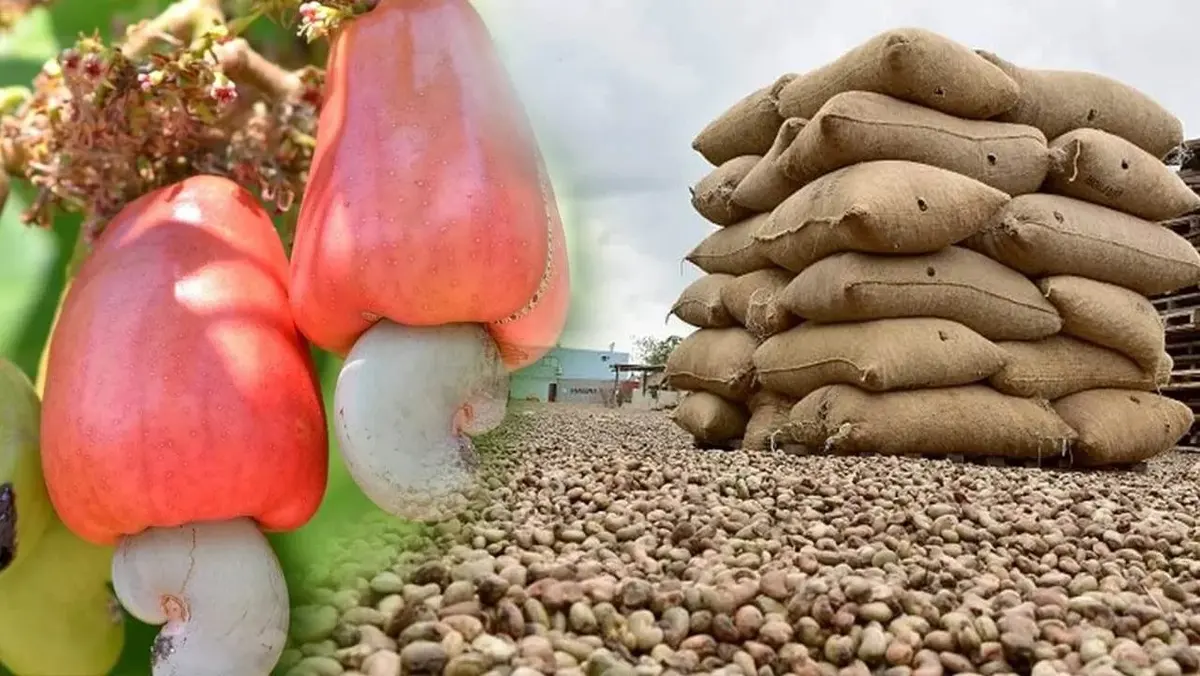
Who issues the licence to buy raw cashewnuts? The Cashewnut Board of Tanzania, established by section 3(1) of the Cashewnut Industry Act, 2009 (Act No. 18 of 2009), which licenses buying, selling, processing, exporting, importing and warehouse operation under section 15(1). A BRELA certificate plus a trading licence does not permit a bid. Marketing raw nuts unlicensed is an offence under section 18(1), punished by a fine between TZS 10,000,000 and TZS 500,000,000. Volume moves through cooperative warehouses and an auction floor, not the farm gate. Confirm the season’s categories, conditions and forms on cashew.go.tz.
This page is the raw cashewnut buying operating file: what a company must hold before it may lawfully purchase raw nuts in Mainland Tanzania and take delivery against a warehouse receipt. It is not a kernel-trading note and not a farm-gate price sheet.
- Processed kernels instead of raw nuts: the wholesale kernel file
- The full 2026/27 shipping route: cashew export operating guide
- The same licensing logic on another crop: Coffee Board buying and processing licences
- Which board owns which crop: crop regulator map
As at 14 September 2026. Confirm the current season circular with the Cashewnut Board of Tanzania; this file rests on the 2009 Act, the Warehouse Receipts Act, 2005, the Commodity Exchanges Act, 2015 and the Export Levy Act Cap. 196.
Who issues the licence, and under which instrument
The Board is a creature of statute. Section 15(3) makes it the issuing authority for every licence class in the industry, and section 16 lets it attach terms and conditions to each one. Those conditions carry the season’s real rules: the paid-up capital the Board wants to see, bank guarantees, warehouse capacity, regional coverage. They are set by the Board rather than by Parliament, and they move between seasons.
Pricing is also a Board function. Section 5(3)(d) gives it power to provide the method of pricing cashewnuts, and the interpretation section treats the setting of indicative prices as regulatory. A buyer who budgets on last season’s indicative price and meets a higher floor in October has mispriced the whole book.
Cashew is a Mainland file. Agriculture and internal trade are non-Union matters, so the Board’s writ stops at the channel. An island operation registers at BPRA, answers to Zanzibar’s own agriculture and trade authorities, and settles non-Union taxes with ZRA.
Screen the activity against the reserved list first
The 2009 Act states no citizenship bar on a licence holder. That is not the end of the question. Primary crop buying sits close to the trading activities reserved for citizens by GN No. 487A of 2025, and the Board may impose a shareholding or local-participation condition under section 16 whatever the Act omits. Test the exact activity (buying at primary market, aggregating, processing, exporting) against that reserved list before you allot shares to a non-citizen.
In practice a foreign trading house either buys through a Tanzanian subsidiary whose cap table has been checked, or contracts with a licensed local buyer. Deciding this after incorporation costs a share transfer, a BRELA filing and, usually, a season.
The six licence classes, and which one a buyer needs
Section 15(1) lists six classes. They are not interchangeable, and holding one implies none of the others.
| Class under s.15(1) | What it permits | Who usually holds it |
|---|---|---|
| Buying | Purchasing raw nuts from growers or cooperative sellers | Aggregators, processors sourcing feedstock, exporter buying arms |
| Selling | Offering raw nuts into the market as a licensed seller | Cooperative unions and AMCOS holding grower stock |
| Warehouse operation | Storing graded lots and issuing receipts against them | Store operators, separately licensed under the warehouse regime |
| Processing | Shelling, peeling and grading nuts into kernels | Factories in Mtwara, Lindi, Pwani and Dar es Salaam |
| Exporting | Shipping raw nuts or kernels out of Mainland Tanzania | Trading houses and integrated processors |
Importing is the sixth, and matters to processors bringing nuts in to keep a factory running out of season. A buying licence carries no export right: section 18(1) treats unlicensed export as its own offence, adding a custodial term of two to five years to the fine band. Section 18(2) attaches identical consequences to transferring a licence, which ends the practice of renting one from a dormant holder for a season.
Where the nut is legally bought, weighed and graded
Section 19 requires nuts at buying centres to be graded by experts the Board designates. Trading ungraded stock is punished under section 20(3) by a fine ranging from TZS 2,000,000 to TZS 500,000,000, and section 20(4) puts grading by an unqualified person on the same scale. Grade is therefore a legal fact, not a commercial opinion, and any argument about it is an argument with the designated grader.
Adulteration is heavier and split by scale: section 23(a) covers the smallholder at TZS 10,000,000 to TZS 50,000,000, while section 23(b) reaches large-scale adulteration at TZS 50,000,000 to TZS 200,000,000. A buyer who accepts moisture-loaded or stone-weighted lots to hit a tonnage target is inside that section, not merely holding poor stock.
Delivery runs through the warehouse receipt system. Societies registered under the Cooperative Societies Act, 2013 aggregate grower deliveries into licensed stores; lots are then offered on the Tanzania Mercantile Exchange, which the Capital Markets and Securities Authority licenses under the 2015 exchange statute. A buyer bids as a member or through a broker, settles, and collects the receipt. Scales at the centre must be verified by the Weights and Measures Agency. Cash at a village roadside sits outside all of it.
The sequence from incorporation to first accepted bid
- Incorporate and screen: Companies Act Cap. 212, with the shareholding already tested against GN No. 487A of 2025.
- Take the tax registrations from TRA, including VAT once turnover will cross the TZS 200,000,000 threshold in the VAT Act Cap. 148.
- Obtain the trading licence under the Business Licensing Act Cap. 208, from the ministry or the local authority by class of trade.
- File the Board application for the buying class, with the pack below, and meet the capital or guarantee condition imposed for the season.
- Register the regional footprint: buying centres, storage arrangements and district registrations wherever you intend to take delivery.
- Join the auction route as an exchange member or under a broker mandate, and fund the settlement account before the first sale.
- Bid, settle and collect the receipt, then reconcile grade, weight and cess with the district before the lot moves.
Documents the buying file needs
Certificate of incorporation with memorandum and articles; a BRELA extract showing current directors and beneficial-ownership particulars; TIN and VAT certificates; the trading licence; accounts evidencing the working capital the Board expects; a bank reference or guarantee where the season’s conditions call for one; lease or title evidence for centres and storage; the store operator’s licence where you hold your own; verified weighing-equipment certificates; and exchange membership papers or a signed broker mandate. Section 13(4) lets the Board charge a prescribed fee for a register extract: that extract is how you verify a counterparty’s licence is live, rather than a photograph.
What the nut carries: levy, cess and tax
Raw cashewnut export attracts an export levy under Cap. 196, long set at 15% of free-on-board value or USD 160 per metric tonne, whichever is greater. It explains why raw and kernel shipments price differently, and is the line most often missed in a raw book. Confirm the live schedule on tra.go.tz.
Produce cess is charged by the district council under the Local Government Finance Act Cap. 290 on nuts leaving the district; the ceiling has moved by Finance Act more than once, so take the council’s current rate in writing rather than assuming last season’s. The same Act carries a service levy of 0.3% of turnover, payable where the business operates. Corporate income tax runs at 30% under the Income Tax Act Cap. 332, with provisional instalments due on the last day of the third, sixth, ninth and twelfth months of the accounting period. Exports of goods are zero-rated while the standard VAT rate is 18% under Cap. 148: which puts a raw exporter in a refund position on domestic input tax, not a payment position.
Illustrative arithmetic on one 100-tonne lot
Illustrative arithmetic, not a quotation. A buyer takes 100 tonnes at auction at TZS 2,800 per kilogram: 100,000 kg × TZS 2,800 = TZS 280,000,000 for the lot. Brokerage, storage and handling of TZS 12,000,000 carry input VAT of TZS 2,160,000 at the standard rate, recoverable against a zero-rated export supply. The 0.3% service levy on a TZS 280,000,000 turnover line is TZS 840,000.
The lot then ships at USD 1,500 per tonne free on board, so USD 150,000. The levy test compares 15% of that value, being USD 22,500, against USD 160 × 100 tonnes, being USD 16,000. The greater figure binds, so USD 22,500. A buyer who budgeted the per-tonne floor and met the ad valorem line is USD 6,500 short on a single lot, before cess.
Where this file stalls
- Contracting volume on a company extract and a trading licence, with no Board application yet filed
- Missing the capital or bank-guarantee condition set under section 16, discovered in October once auctions have opened
- Buying outside the cooperative and auction route, then having no receipt to present to a bank or an exporter
- Treating the buying class as an export right, which section 18(1) does not allow
- Raising a grade dispute after payment, when the designated grader’s certificate has already fixed the class
- Pricing a raw shipment on the per-tonne floor when the percentage line is higher
- Allotting shares to a non-citizen before anyone read the reserved list
What changed: exchange trading and the Trade Portal procedure
Raw cashew has moved from bilateral buying to organised auctions on the mercantile exchange, with cooperative unions on the sell side and warehouse receipts as the delivery instrument. Price discovery is public, settlement is disciplined, and the informal village buyer has no lawful channel for volume.
Application has been pulled into the government’s electronic trade procedure. The Tanzania Trade Information Portal publishes the step list, the responsible desk and the supporting documents for this licence, and it is the version to read before the season opens rather than a broker’s recollection. Fees and licence conditions are made by regulations under section 37(2)(l), so a Government Notice can move them without the statute changing at all. Read the portal steps and the Board’s circular together.
Mandate-holders this file does not replace
The Cashewnut Board owns the licence and the grading regime. BRELA owns incorporation and beneficial ownership. TRA owns the export levy, VAT and income tax. The Tanzania Cooperative Development Commission owns the societies on the sell side. The Warehouse Licensing Board owns store licensing. CMSA owns the exchange and its brokers. The Tanzania Plant Health and Pesticides Authority issues the phytosanitary certificate, and the Tanzania Bureau of Standards owns product standards. District councils own cess. Zatra prepares, structures and coordinates across those desks; it does not issue licences, practise law or audit, and no approval is guaranteed.
What to confirm before you act
- The Board’s current licence categories, application form and fee, and the season’s capital or guarantee condition
- Whether your intended shareholding survives GN No. 487A of 2025 for this exact activity
- The indicative price basis set for the season under section 5(3)(d)
- Each district’s current produce cess rate, in writing, for every district you will buy in
- The live export levy schedule, and whether the percentage or the per-tonne line binds your grade
- Exchange membership or broker mandate, and the settlement account the auction requires
- That the seller or intermediary holds a current licence, by register extract under section 13(4)
Frequently asked questions
Is a registered company enough to buy raw cashewnuts?
No. Incorporation creates the legal person; the right to buy comes from a Board licence issued under section 15 of the Cashewnut Industry Act. Both are needed, and in that order.
What happens if I buy without the licence?
Section 18(1) sets a fine of not less than TZS 10,000,000 and not more than TZS 500,000,000, or imprisonment of two to five years, for marketing, processing or exporting cashewnuts unlicensed. Both can be imposed.
Can a licence be transferred or rented for one season?
No. Section 18(2) attaches the same penalty range to a transfer. A dormant holder lending its paperwork exposes both parties, and the Board can confirm the registered holder on request.
Does the buying class let me export the nuts?
No. Exporting is a separate class in section 15(1). Apply for both if you intend to buy and ship, and budget the export levy on raw consignments under Cap. 196.
Can a foreign-owned company hold it?
The statute states no citizenship bar, but the activity must be tested under GN No. 487A of 2025 before shares are allotted, and against any local-participation condition imposed under section 16.
Does a Cashewnut Board licence work in Zanzibar?
No. Crop marketing is a non-Union matter, so the island runs its own registration, licensing and revenue desks. Treat Unguja and Pemba as a separate file from the outset.
Why must lots pass through a store and an auction?
Cooperative sellers deliver into warehouses licensed under the Warehouse Receipts Act, 2005, and lots are sold on an exchange licensed under the Commodity Exchanges Act, 2015. The receipt is what a bank or an exporter will finance.
Sources & regulators
Verify before filing: Rates, forms and thresholds move by Finance Act, Government Notice and portal revision. Confirm the live schedule on the mandate-holder portal before you budget or submit. Law-firm alerts and Big Four notes are discovery only.
- Cashew Board of Tanzania: licence classes under the Cashewnut Industry Act, season circulars, indicative price basis and application forms. Accessed 2026-09-14.
- Tanzania Trade Information Portal: published step list, responsible desk and supporting documents for the cashewnut buying licence. Accessed 2026-09-14.
- Tanzania Revenue Authority: export levy schedule on raw cashewnuts, VAT registration and corporate income tax. Accessed 2026-09-14.
- BRELA: incorporation under the Companies Act Cap. 212 and beneficial-ownership particulars. Accessed 2026-09-14.
- Capital Markets and Securities Authority: licensing of the commodity exchange and its brokers under the Commodity Exchanges Act, 2015. Accessed 2026-09-14.

Exporting from Tanzania
The permit, the proceeds and the port decide the rest.
- The ten exports that carry a tax or levy, each against its instrument
- The permit each product needs: crop boards, COPRA, TPHPA, minerals, fish and forest produce
- Customs in TANCIS, proceeds within 90 days, zero rating and the refund
Handbook 02 · 92 pages · PDF · free, no sign-up
Disclaimer
This article is informational orientation. It is not legal, tax or investment advice and not a government decision. Tanzanian instruments move by Act, Government Notice, Finance Act and portal revision. If a sentence here disagrees with the live mandate-holder, the mandate-holder wins. Zatra Consultants Limited does not issue licences, permits, tax clearances or approvals, and gives no assurance of any regulatory or banking outcome. Professional fees are published only on /pricing/.