
STAMICO Joint Venture or Private Mineral Right: The 2026 Operating Choice
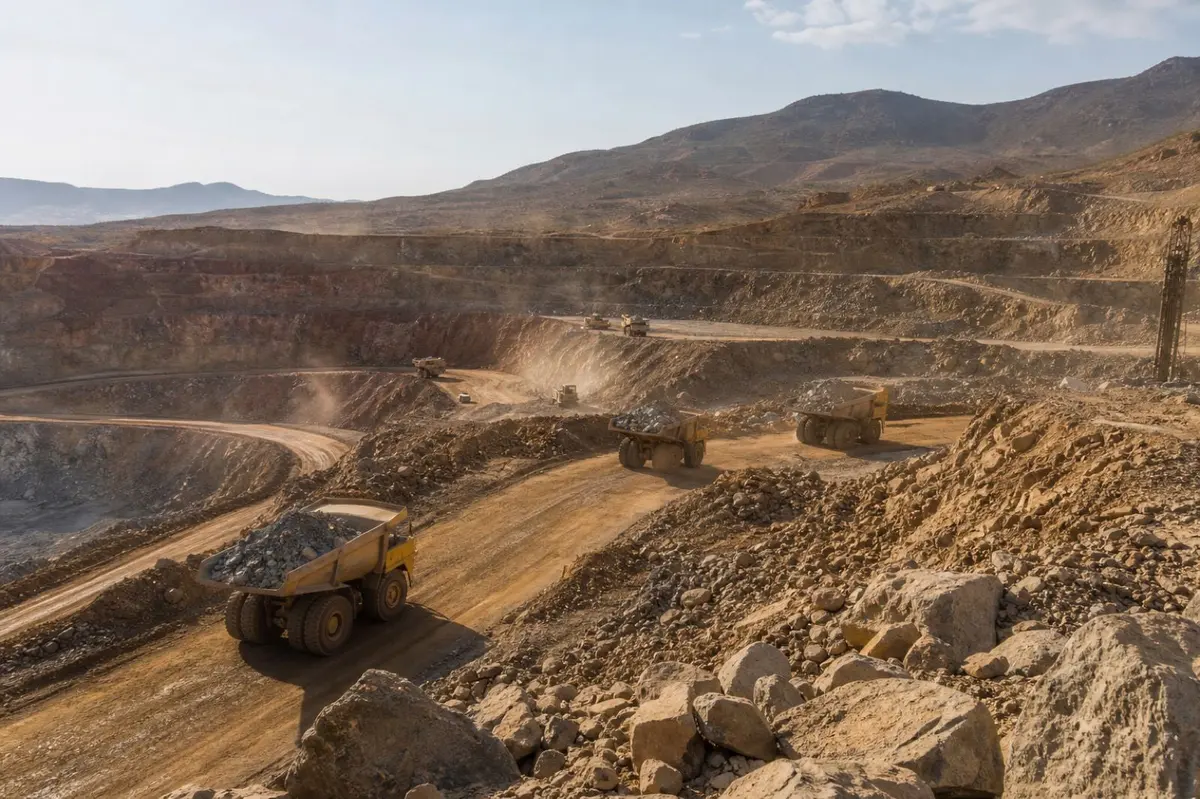
How does a mining investor actually enter Tanzania in 2026? Through one of two doors, not through TISEZA. Door A is a partnership with the State Mining Corporation on a prospecting or primary mining licence STAMICO already holds: lithium at Hombolo-Magali, four graphite licences with airborne data, REE at Panda Hill, nickel and cobalt on the Karagwe-Ankole belt, iron ore in Njombe, plus tin, gold, limestone, phosphate, manganese and marble packages in the current booklet. Door B is a private mineral right at the Mining Commission: a prospecting licence, a mining licence (USD 100,000 to 100 million) or a special mining licence (from USD 100 million), with foreigners barred from Primary Mining Licences and gemstone mining reserved. Both doors still need a BRELA company, a TRA file, an EIA where the activity triggers one, and (on an ML or SML) the 16 per cent non-dilutable free-carried state interest. TISEZA registration sits beside the file. It does not replace the Commission. Confirm live on stamico.co.tz and tumemadini.go.tz.
This page is the entry-route file: STAMICO partnership versus a private Commission application. It is not a licence-class map, not a dealer-licence walkthrough, and not a local-content reserved-goods list. Those already exist.
- Licence classes: mining licences explained
- Requirements and process: 2026 mining-licence guide
- Dealer licence: mineral dealer licence
- Reserved procurement: 20 reserved mining goods and services
- Local-content desks: NEEC and sector regulators
Sources in hand: STAMICO’s current opportunities booklet (Ministry of Minerals), and the Ministry of Minerals Investor’s Guide Tanzania Mining Sector 2024. Figures from the 2024 guide are labelled as 2024-guide figures. Confirm the live Mining Commission portal and the live STAMICO list before you treat a mineral as available.
Why the door comes before the mineral
Tanzanian mining copy usually starts with gold, nickel or graphite and then mentions “a licence.” For a foreign-owned vehicle that sequence hides the restriction. The 2024 Investor’s Guide is blunt: foreigners may not hold or conduct exploration or mining on a Primary Mining Licence; gemstone exploration and mining are reserved to Tanzanians, with ministerial room for a 50/50 joint project where skill, technology or capital requires it; a mineral dealer’s licence requires Tanzanians to hold not less than 25 per cent of the licensed company, with 75 per cent the foreign maximum. Those rules sit on Door B. They do not disappear because Door A is a state corporation.
STAMICO, established in 1972, is a government-owned enterprise that invests across the mining value chain, develops projects on its own, through subsidiaries and in joint ventures, and sells drilling (diamond, reverse-circulation, rotary-air-blast, air-core) and geological consultancy. A partnership with STAMICO is a commercial negotiation onto a licence the corporation already holds. It is not a shortcut around the Mining Act, Cap. 123, and it is not a TISEZA certificate.

Door A: what the STAMICO booklet is actually offering
The booklet’s honest title is “licences for joint-venture development,” not “producing mines for sale.” Read each package as an exploration problem:
| Commodity (booklet) | Where STAMICO places it | What the booklet says is done |
|---|---|---|
| Lithium: one PL | Hombolo-Magali belt, Dodoma; lepidolite and spodumene in pegmatites | Licence granted; exploration still required to delineate targets |
| Graphite: four PLs | Airborne survey cited for PL19562/2022, PL12678/2024, PL19286/2022, PL27456/2024 | NE to SW conductance anomalies; quantity and quality not yet drilled out in the booklet |
| REE: one PL | Panda Hill carbonatite, Songwe; niobium and phosphate also mentioned | Geological and geochemical data available; drilling still required |
| Nickel: one PL | Karagwe, ~75 km SW of Kagera Port, along strike of Kabanga | Reconnaissance done; detailed exploration planned |
| Cobalt: two PLs | Ngara, Karagwe-Ankole belt | Exploration programme described as still to run |
| Iron ore: four PLs | Ludewa, Njombe, near Liganga to Mchuchuma | Titaniferous magnetite in anorthositic gabbro; detailed work required |
| Tin: one PL | Karagwe, cassiterite | Detailed mapping and geophysics still required |
| Gold | Lake Victoria goldfield and Lupa (Geita, Kahama, Shinyanga, Chunya, Saza) | Maps available; detail sits in the licence file, not the brochure |
| Limestone: 10 PMLs | Tanga, Jurassic reef limestone, ~41 km from Tanga port | Primary mining licences; still need mapping and drilling. Foreigners cannot hold PMLs: the JV structure has to solve that, not ignore it |
| Phosphate: one PL | Bahi depression, Dodoma | Reconnaissance done |
| Manganese: one PL | Njombe; GST-reported grades 35 to 40% in the booklet | Treat that grade as a booklet citation of GST, not as a measured reserve. Confirm GST and the licence file |
| Marble: one PL | Masasi, Mtwara; Mozambique Belt | Exploration still required |
Separately, the booklet advertises mineral trading and services: Rafiki briquettes, coal trading from three Songwe licences described as holding over 300 million tonnes with mining ongoing at Kabulo for cement plants, and drilling services already used at named operations including Geita Gold Mining, Buckreef, TGDC geothermal and Buhemba. Those are service or offtake conversations, not mineral rights. A coal-trading discussion is not a mining licence.
The information gain is the stage, not the mineral name. A “lithium JV” that still needs first-pass drilling is a prospect-generator deal. Price it that way. Do not import a producing-mine model onto a PL that the booklet itself says is due for exploration.
Door B: the private Commission file, in one page
The 2024 Investor’s Guide restates the Mining Act architecture the licence-class pages already own. This file only needs the operating consequences:
- Prospecting licence: four years, first renewal three years, second renewal two years; a holder (and its shareholders) may not stack more than twenty valid PLs unless the combined area stays under 2,000 km².
- Mining licence: medium scale, capital between USD 100,000 and USD 100 million.
- Special mining licence: large scale, capital not less than USD 100 million.
- State participation: on an ML or SML the government has not less than 16 per cent non-dilutable free-carried interest, with a further acquisition right tied to tax expenditures.
- Royalties and inspection: 2024-guide rates: 6 per cent gross value on diamonds, gemstones, uranium and precious metals; 1 per cent on polished and cut gemstones; 3 per cent on industrial minerals and building materials; salt 1 per cent; coal 1 per cent for local use and 3 per cent for export; plus a 1 per cent inspection fee before clearance. Confirm the live Commission schedule. This is a 2024 printed table.
Application-fee tables in that guide are in United States dollars and are likewise 2024 print. They are not copied here as current invoices. Open the Mining Commission portal for the live shilling or dollar row. Geological data (maps, airborne surveys, GST holdings in Dodoma) is the public starting set for Door B. The guide’s 2023 mapping snapshot (high-resolution airborne cover cited at 17 per cent of the country, plus older regional cover) is orientation, not a reserve statement.
What sits on both doors
A BRELA company and a TRA file come first. A TISEZA registration is useful when incentives or a zone plot are in play; it does not issue a mineral right. Environmental documentation follows the activity. Local-content filings, NEEC and the mining reserved-goods list, attach to the mining operation, not to the TISEZA paper. Compensation, relocation and resettlement plans must be implemented before mining starts, on the 2024 guide’s reading of the Act.
Dealer and broker licences are a third door altogether: buying, selling and exporting minerals. Broker licences are for citizens only. Do not treat a STAMICO JV term sheet as a dealer licence, or a dealer licence as a mining right. The existing dealer page owns that class.
GN No. 487A of 2025 is separately reported as reserving scheduled activities to citizens. This page publishes no penalty figure. Whether a particular mining-adjacent service is on that schedule is an advocate’s question against the gazetted text, not a brochure inference.
Build sequence
- Pick the door. If you need a producing asset, neither the booklet nor a first-grant PL is that asset. Walk away or reprice.
- If Door A: diligence the licence number, class (PL versus PML), expiry, work commitments, and whether a foreign partner can sit on that class at all. Then negotiate the JV. Then file whatever the Commission requires to record the change.
- If Door B: pull GST data, apply for the mineral right that matches scale, and budget the 16 per cent free carry on an ML/SML from day one.
- Run EIA, local-content and people files in parallel, not after first ore.
- Keep mining advisory fees on /pricing/, separate from Commission charges, STAMICO commercial terms and TRA.
The third door the booklet only names, and the local-content overlay on all three
Dealer, broker and processing licences are not a STAMICO joint venture and not a private PL. They are a Mining Commission trading and plant file. Broker licences are for citizens only on the 2024 guide’s reading. A mineral dealer’s licence requires Tanzanians to hold not less than 25 per cent of the licensed company, with 75 per cent the foreign maximum. A processing plant is a NEMC and Commission file; it is not, by that fact, a mineral right, and the 16 per cent non-dilutable free-carried state interest attaches to a company holding a Mining Licence or a Special Mining Licence, not to a processing licence, a dealer licence, or a contractor working under a technical-support arrangement without a mineral right of its own. That last split is Mining Act architecture, Cap. 123, as restated in the 2024 guide and in current Commission practice. Confirm the live Act before a structure is built around it.
Where the counterparty on a technical-support arrangement holds a Primary Mining Licence, Commission approval and registration of the agreement before implementation is the live rule under the Mining (Technical Support to Small Scale Miners) Regulations, 2025 (GN No. 260 of 2025, in force 25 April 2025). A foreign technical provider is permitted where the expertise is not readily available in Tanzania, must operate through a joint venture with an indigenous Tanzanian company, and the licence holder must be guaranteed not less than 30 per cent of profit after government charges, irrespective of the provider’s cost recovery. The initial term is capped at three years and is renewable. Where the counterparty holds an ML or SML, that small-scale TSA regime does not apply on its face, but assignment-consent and local-participation rules remain live. This page names no private client and publishes no proposal pricing. The class of licence in the other party’s hand is the first document to read.
Local content is not a TISEZA sentence. The Mining Commission’s own local-content desk restates the 2018 Regulations as amended in 2019, sitting on section 102 of the Mining Act: preference for Tanzanian goods and indigenous companies; a non-indigenous supplier required to incorporate a joint venture with an indigenous Tanzanian company holding at least 20 per cent; local-content plans on a long-term and annual basis against the First Schedule minima; quarterly and annual performance reports; notification of sole-source contracts and of competitive bids above the shilling equivalent of USD 100,000, with a ten-working-day Commission clock on the bid pack; and an annual CSR plan agreed with the host local government. An “indigenous Tanzanian company” in that instrument is a Companies Act company with at least 20 per cent citizen equity, Tanzanian citizens in at least 80 per cent of executive and senior management positions, and 100 per cent of non-managerial positions. The reserved-goods list is a sister page. Do not treat a STAMICO term sheet as a waiver of any of those filings.
Where mining entry files actually fail
Pricing a producing mine onto a prospecting licence the booklet itself says is due for first-pass drilling. Lithium, graphite, REE, nickel, cobalt, iron, tin, phosphate, manganese and marble packages in the current booklet are exploration problems. Gold is maps-and-a-licence-file. Limestone is ten PMLs, and foreigners cannot hold PMLs. Coal trading from Songwe licences is an offtake conversation, not a mineral right.
Assuming a state partner waives the PML and gemstone reservations. The 2024 guide is blunt: foreigners may not hold or conduct exploration or mining on a Primary Mining Licence; gemstone exploration and mining are reserved to Tanzanians, with ministerial room for a 50/50 joint project where skill, technology or capital requires it. STAMICO’s Tanga limestone package is printed as ten PMLs. The structure has to solve that restriction. Get an advocate’s reading before you term-sheet.
Treating “along strike of Kabanga” as Kabanga. The booklet places a nickel PL in Karagwe along strike of Kabanga. It does not offer Kabanga. Geology is not title.
Forgetting the 16 per cent free carry until the mining agreement is on the table. Budget it on an ML or SML from day one. A further acquisition right tied to tax expenditures is a separate state-participation limb. Neither attaches, on the architecture above, to a pure processing or dealer vehicle: which is why some files split operator, plant and trading. Splitting is not a toy. An arrangement that transfers control of the mineral right in substance may be treated as an assignment, which needs the licensing authority’s written consent.
Running TISEZA as a substitute for the Commission. TISEZA is investment facilitation. The mineral right is a Mining Commission instrument. GST data rooms in Dodoma are the public starting set for Door B. Confirm live licence numbers on tumemadini.go.tz and the live STAMICO list on stamico.co.tz. A booklet page is not a reservation.
The 2024 guide’s royalty table (6 per cent gross value on diamonds, gemstones, uranium and precious metals; 1 per cent on polished and cut gemstones; 3 per cent on industrial minerals and building materials; salt 1 per cent; coal 1 per cent for local use and 3 per cent for export; plus a 1 per cent inspection fee) is a 2024 print. Application-fee tables in that guide are in United States dollars and are likewise 2024 print. Open the Commission portal for the live row. This page does not copy them as current invoices.

Currency of this file
The STAMICO booklet is undated on the extracted pages and will be replaced when a licence is joint-ventured or dropped. The Investor’s Guide is a 2024 print. Live licence availability, royalty rows and application fees must be reconfirmed on the Commission and STAMICO portals. This page names no private client and publishes no proposal pricing.
Frequently asked questions
Does a STAMICO joint venture replace a Mining Commission licence?
No. You are negotiating onto a licence STAMICO already holds, or creating a vehicle that must still satisfy the Mining Act. The Commission remains the mineral-right authority.
Can a foreign company take a Primary Mining Licence through STAMICO?
The 2024 guide says foreigners may not hold or conduct work on a PML. STAMICO’s Tanga limestone package is printed as ten PMLs. The structure has to solve that restriction. Do not assume a state partner waives it. Get an advocate’s reading before you term-sheet.
Is Kabanga nickel in the STAMICO booklet?
The booklet places a STAMICO nickel PL along strike of Kabanga. It does not offer Kabanga itself. Treat “along strike” as geology, not as title.
What state share sits on a mining licence?
The 2024 guide restates a minimum 16 per cent non-dilutable free-carried interest on ML and SML operations, with a further acquisition right tied to tax expenditures. Confirm the live Act and the mining agreement.
Does TISEZA registration let me mine?
No. TISEZA is investment facilitation. The mineral right is a Mining Commission instrument.
Where do I confirm a STAMICO package is still available?
With STAMICO and against the Commission register for that licence number. A booklet page is not a reservation.
Does the 16 per cent free carry sit on a processing or dealer company?
On the Mining Act architecture restated in the 2024 guide, the non-dilutable free-carried interest attaches to a company holding an ML or SML, not to a processing licence, a dealer licence, or a contractor without a mineral right. Confirm the live Act before you split vehicles.
Does a technical-support agreement on a PML need Commission approval?
GN No. 260 of 2025 requires approval and registration before implementation where the counterparty holds a Primary Mining Licence, with further indigenous-JV and profit-share conditions. Confirm the live regulations and the licence class in the other party’s hand.
Sources & regulators
Verify before you term-sheet: Licence numbers, classes and royalties move. Confirm the live register.
- State Mining Corporation (STAMICO): current JV booklet and drilling desk. Confirm the live package list. Accessed 2026-09-10.
- Mining Commission: mineral rights, dealer licences, live fees. Accessed 2026-09-10.
- Ministry of Minerals, Investor’s Guide Tanzania Mining Sector 2024: licence architecture, 16 per cent free carry, royalty table, PML and gemstone reservations. 2024 print. Confirm live. Accessed 2026-09-10.
- Geological Survey of Tanzania: maps and data rooms in Dodoma. Accessed 2026-09-10.
- TISEZA: investment registration beside, not instead of, the mineral right. Accessed 2026-09-10.
Disclaimer
This article is informational orientation. It is not legal, tax, investment or geological advice and not a government decision. STAMICO booklet minerals are exploration packages unless a live licence file proves otherwise. 2024-guide royalties and application fees must be reconfirmed. Zatra Consultants Limited does not issue licences and gives no assurance of any JV or Commission outcome. Professional fees are published only on /pricing/.